
🧑🌾 Introduction to Industrial Agriculture
Industrial agriculture is a modern farming method that focuses on mass production of crops and livestock using advanced technologies, chemicals, and mechanization. It has revolutionized how food is grown, processed, and distributed—making it faster and more efficient.
Today, nearly every supermarket aisle reflects its influence—from packaged snacks to fresh produce. This large-scale system provides affordable food but also raises concerns about environmental impact, food quality, and sustainability.
🕰 History of Industrial Agriculture
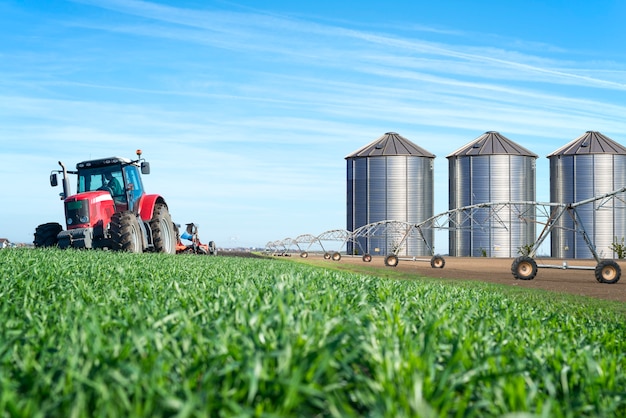
Industrial agriculture didn’t happen overnight. It started taking shape after the Industrial Revolution, with key events such as:
- The Green Revolution (1940s-60s): Introduced high-yield crop varieties and chemical fertilizers.
- Mechanization (1900s): Replaced manual labor with tractors and harvesters.
- Post-WWII Chemical Advancements: Pesticides and synthetic fertilizers became mainstream.
This history set the foundation for today’s globalized agricultural systems.
⚙️ Key Technologies in Industrial Agriculture
🔧 Mechanization
Machines like combines and seed drills have reduced the need for manual labor. With GPS-guided tractors and automated irrigation, farmers can now manage thousands of acres with precision.
🧪 Chemical Use
- Fertilizers increase soil nutrients for faster plant growth.
- Pesticides protect crops from insects and disease.
- Herbicides manage weeds effectively.
However, overuse can lead to pollution and resistance among pests.
🧬 GMOs and Biotechnology
Genetically modified organisms (GMOs) are engineered for better yield, drought resistance, and pest tolerance. Crops like Bt cotton and Roundup Ready soybeans are common in industrial farming.
💰 Economic Benefits of Industrial Agriculture
Industrial agriculture supports:
- Lower production costs through economies of scale
- Increased output per acre, feeding growing populations
- Job creation in agro-industries, logistics, and supply chains
For developing countries, it can boost GDP and improve infrastructure.
🌍 Environmental Challenges
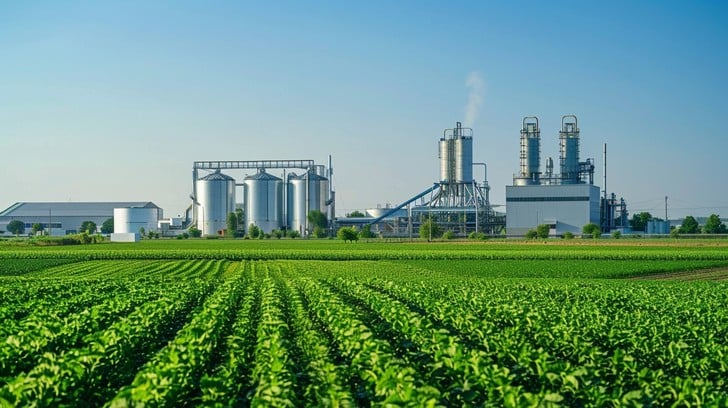
While efficient, industrial agriculture is resource-intensive. Key concerns include:
- Soil erosion from over-tilling
- Water overuse in irrigation-heavy crops
- Loss of biodiversity due to monoculture systems
- Greenhouse gas emissions from livestock and fertilizers
Balancing production with environmental care is vital for long-term food security.
👥 Social Impacts
Industrial agriculture changes rural societies. Pros include:
- More employment in supply chains and processing
- Improved access to affordable food
But there are downsides:
- Health risks from chemical exposure
- Rural depopulation as small farms can’t compete
- Labor exploitation in low-wage economies
🍽 Global Food Security
By increasing food output, industrial farming plays a major role in feeding the planet. It supports:
- Urban food supply chains
- Emergency relief programs
- Export economies for many countries
However, access remains uneven—many regions still face hunger due to poverty, politics, or distribution gaps.
🥦 Industrial vs Organic Agriculture
| Feature | Industrial Agriculture | Organic Agriculture |
|---|---|---|
| Fertilizers | Synthetic | Natural compost, manure |
| Pesticides | Chemical-based | Biopesticides, crop rotation |
| GMO Use | Common | Prohibited |
| Environmental Impact | High | Lower |
| Cost | Lower | Higher |
Consumer demand for organic food is rising, though industrial methods still dominate due to lower costs.
🌱 Sustainability in Industrial Agriculture
Sustainable practices include:
- Precision farming to reduce input waste
- Cover cropping to enrich soil health
- Integrated pest management (IPM)
- Carbon farming for emission control
Adopting these helps maintain production while protecting ecosystems.
🗺 Case Study: U.S. Corn Belt
The Corn Belt—stretching across Iowa, Illinois, and Indiana—is a prime example of industrial farming:
- Produces over 30% of global corn
- Heavy use of GMOs and fertilizers
- Key supplier for biofuel and livestock feed
This model has increased yields but also caused nitrate pollution in local water bodies.
🤖 Future Trends and Innovations
What’s next?
- AI and data analytics for weather and yield prediction
- Drones and robotics for planting and harvesting
- Vertical farming in urban spaces
- CRISPR gene editing for targeted crop traits
These could revolutionize productivity and reduce environmental impact.
🏛 Government Policies and Regulation
Governments influence farming through:
- Subsidies for staple crops like wheat and corn
- Pesticide regulation to ensure safety
- Trade agreements that affect export prices
- Climate change policies pushing green practices
Visit USDA’s Agricultural Policy for in-depth guidelines.
🛒 Consumer Awareness and Demand
Shoppers today want:
- Clean labels with fewer additives
- Sustainably sourced products
- Fair trade and ethical practices
This demand is pushing producers to be more transparent and eco-conscious.
❓ FAQs
1. What is industrial agriculture?
It’s a large-scale farming system that uses technology, chemicals, and mechanization to maximize crop and livestock production.
2. Is industrial agriculture sustainable?
It can be, if it incorporates sustainable practices like crop rotation, reduced chemical use, and precision farming.
3. How does industrial agriculture affect health?
While it provides affordable food, there are concerns about pesticide residues and processed food quality.
4. Are GMOs safe?
Most scientific studies show GMOs are safe to eat, but debates continue about environmental impacts and labeling transparency.
5. How does it differ from traditional farming?
Traditional farming uses manual methods and focuses on biodiversity, while industrial farming emphasizes efficiency and uniformity.
6. Can organic and industrial systems coexist?
Yes. A hybrid approach, called integrated farming, is gaining popularity to balance yield and sustainability.
Solid article! Thinking about variance & making data-driven decisions is key in tournaments. Platforms like betpk game emphasize RTP, which is smart for informed players. Good read!